Our Curriculum Offerings
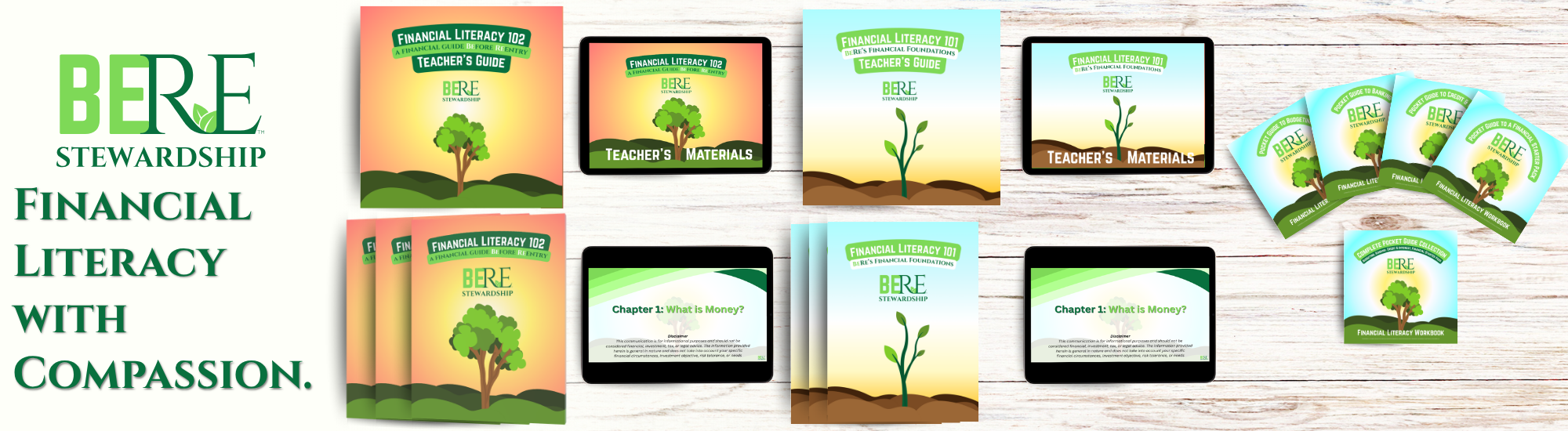
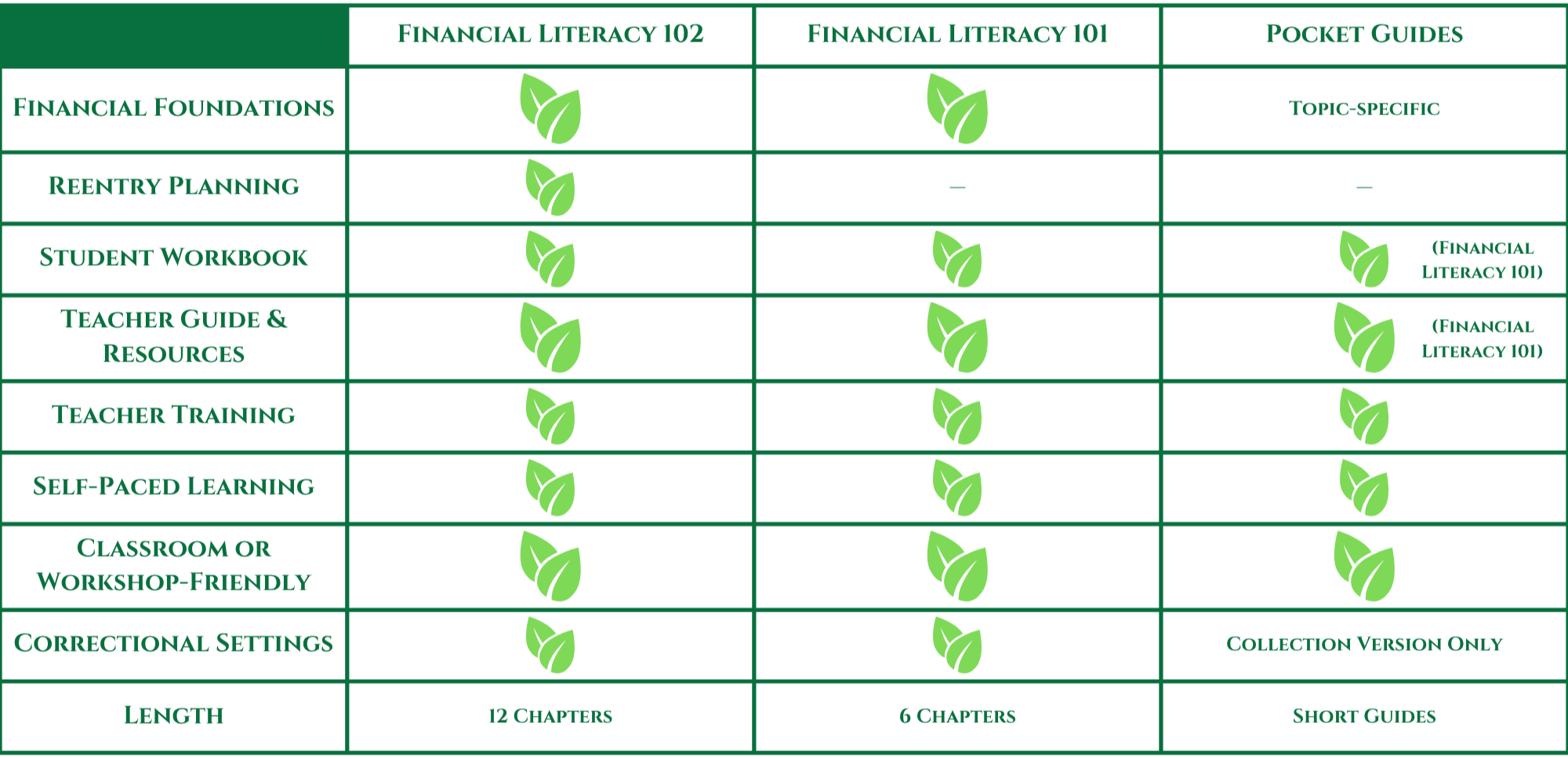
Financial Literacy 102: A Financial Guide Before Reentry is BeRe's comprehensive financial curriculum for people returning from incarceration. Offered as a self-paced workbook or instructor-led program, it equips organizations to prepare learners for post-release financial realities.
Financial Literacy 101: BeRe's Financial Foundations teaches practical, accessible personal finance basics for young adults and adults from low‑income and justice‑impacted communities, focusing on core concepts (excludes reentry modules in Financial Literacy 102).
The BeRe Pocket Guide Series offers concise, practical financial literacy resources for workshops, orientations, group sessions, and supplemental programs. Each guide covers one topic in an accessible, easy-to-use format.
Choose The Best Option For Your Organization
-
At BeRe Stewardship, we don’t assume that good financial decision-making is instinctual. Financial systems are created by people, businesses, and governments, and navigating them is a learned skill. No one is born knowing how to use a credit card, write a check, build a budget, or understand a bank account. These are skills we learn through education, experience, and guidance. That’s why Lesson 1 of our curriculum starts with a simple question: “What is Money?” Before we can expect anyone to navigate complex financial systems, we believe they deserve a strong foundation in the basics. By meeting people where they are and never assuming what they should already know, we can create financial education that is patient, accessible, and grounded in kindness and humility.
-
At BeRe Stewardship, we believe financial education should be as engaging as it is informative. Accurate information is essential, but how that information is presented matters, too. Financial education should feel approachable, inviting, and relevant, not intimidating or overwhelming. We design our materials with that in mind. Bright colors, visual elements, relatable examples, and thoughtful design can make financial concepts easier to engage with and remember. Just as we are more likely to reach for something that invites us in than something that feels like a chore to read, we believe people deserve financial education that they genuinely want to pick up, explore, and learn from.
-
At BeRe Stewardship, we believe financial education is most meaningful when people have the opportunity to put what they learn into practice. If we talk about budgeting, we practice building a budget. If we talk about credit cards, we practice using them responsibly. Financial skills are not simply common sense. They are skills that can be learned, practiced, and strengthened over time. That’s why our curriculum incorporates practical activities and real-world examples alongside financial concepts. By learning through doing, participants can build confidence and develop skills they can carry with them as they navigate reentry, manage their finances, and build their lives beyond incarceration.